Grades 5 & 6
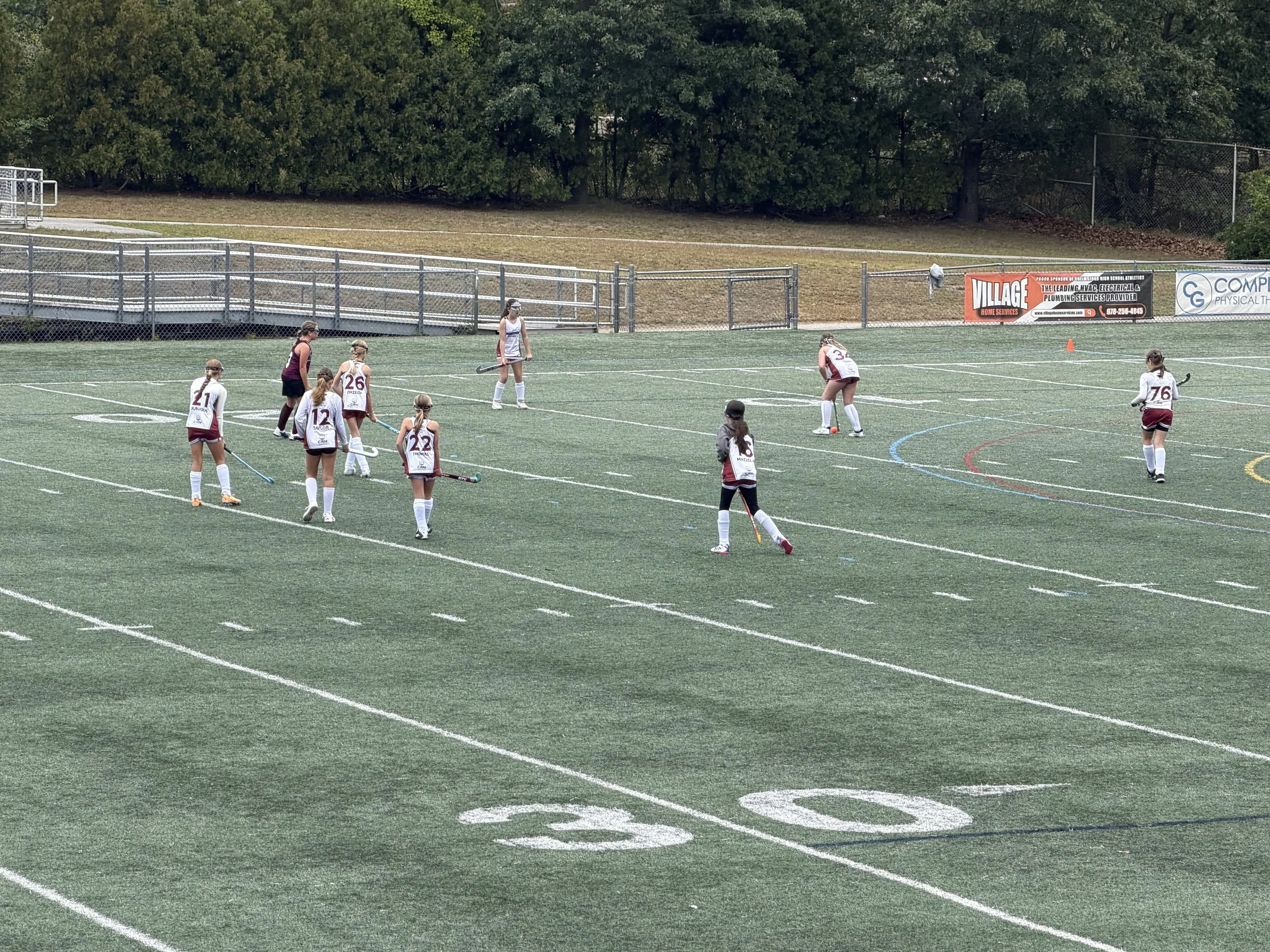
Develop game awareness, passing, and team play on a full-size field. More rules and positions are introduced. Weekly captains are introduced for practices and games.
11 v 11
Full-field play, goalie required.
THE NEXT CHAPTER
Player Development by Age Group
Grades 5/6: Play With Purpose
At the 5/6 level, we continue developing individual skills but place much more emphasis on decision-making, movement, possession, and understanding the full field.
Players should continue mastering all 3/4 skills while developing:
1. Ball Control With Eyes Up
Players should begin scanning the field while carrying the ball rather than watching the ball continuously.
2. Passing on the Move
Players should be able to pass while moving and receive a ball without stopping the entire play.
3. Pass and Move
A pass is not the end of the play.
After passing, immediately find another useful space.
This creates one of the most important combinations in field hockey:
Pass → Move → Receive again
4. Give-and-Go
Pass to a teammate, move around or beyond the defender, and become available to receive the ball back.
5. Flat Pass vs. Through Pass
Flat Pass
A pass across the field or between nearby teammates that allows us to maintain possession and move the defense.
Through Pass
A forward ball played into open space for a teammate to run onto.
A through pass is useful when the space is actually available. We don't want to force the ball forward simply because our goal is in that direction.
6. Width
When we have possession:
Make the field BIG.
Players away from the ball should spread wide and create passing lanes.
When everyone moves toward the ball, we actually make defending easier.
7. Support
The player carrying the ball should ideally have several options.
Teammates can support:
Ahead of the ball
Beside the ball
Behind the ball
Sometimes the best pass is backward so that we can keep possession and attack somewhere else.
8. Switching the Field
If one side becomes crowded, move the ball backward or across the field and attack the open side.
We do not need to force the ball through traffic.
9. Defensive Channeling
Rather than immediately diving for the ball, defenders should learn to control where the attacker can go.
Whenever possible:
Protect the middle and encourage the attacker toward the sideline.
10. Defensive Patience
A defender does not have to win the ball immediately.
Sometimes the best defensive play is simply slowing the attacker down while teammates recover.
11. Communication
Good teams talk.
Useful field communication includes:
"I'm here!" — passing option available
"Left!" / "Right!" — option beside the player
"Time!" — player has space
"Man on!" — defender approaching
"Turn!" — space available behind
"Back!" — support option behind the ball